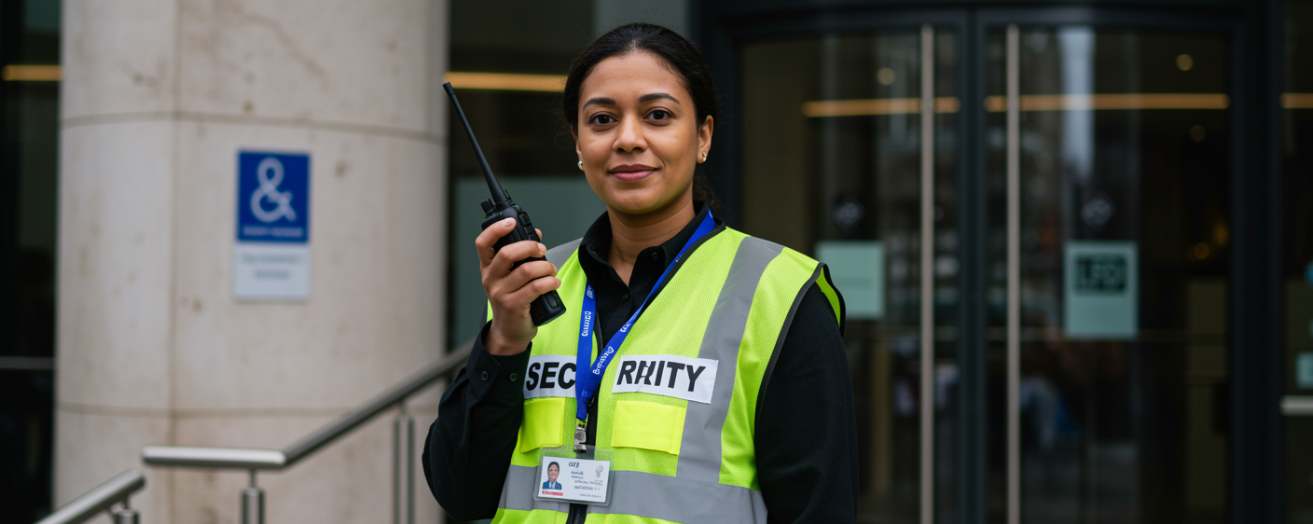
Let’s face it. A lot of the time, it seems that the end users of security guarding services view it as an annoying expense. Many times, you will hear it said that the only reason companies use security personnel is to satisfy the requirements of insurance policies. This perceived attitude explains the desire of so many clients to pay as little as possible for their guard force; after all, they add nothing to the bottom line and seem to do very little.
Frankly, this sentiment is driven by ignorance and is prevalent in organisations that simply do not understand the purpose and role of security officers. Yes, the uniformed chap in the lobby isn’t selling the client’s services, and the woman patrolling the site at night isn’t promoting the customer’s products to any potential buyers. This completely misses the point, though.
Security is no less than an essential business enabler, without which client’s businesses would be seriously degraded and possibly may not be able to operate at all.
Reputational Enhancement
Having smart, professional, helpful security officers in your office reception conveys an air of safety and welcome to new visitors and guests and provides a reassuring presence for staff. Nothing makes a better impression than polite and well presented security personnel offering assistance to those who have no former experience of your company. Visible security at your building’s access points makes a statement. It says that you care about your employees and visitors, and these officers are your ambassadors, the introduction to, and public face of, your company.
The first impression that people will form of your business is directly related to the professionalism and attitude of your security team and the way they interact with guests, visitors, and the general public.
Recommended reading: 10 Characteristics of a Security Officer
Crime Prevention
During your organisation’s normal business hours, the primary role of the physical security team is usually access control. Having a uniformed presence in the lobby or reception area, checking IDs, assisting staff and directing visitors to reception or issuing passes immediately prevents unauthorised access to your sites.
Good security will challenge individuals who are unexpected, or who do not appear to have a valid reason to enter the site, and will summon a supervisor or client representative to authorise or deny access if required. This is a huge deterrent to criminals.
Out of hours, having security on site protecting your premises, perhaps monitoring CCTV and performing regular site patrols, both deters crime and provides rapid detection and reporting of criminal activity. The more diligent your security officers are, the less likely any loss or damage to your company’s property becomes.
Counter Terrorism
With the imminent introduction of Martyn’s Law – the Terrorism (Protection of Premises) Act 2025 – security officers play a more vital role in the disruption of terrorist activity than ever.
Those smart, professional security officers in your reception area, or patrolling the exterior of your buildings, are massively effective at disrupting the hostile reconnaissance operations of those planning terrorist acts. A terrorist will want to spend time researching potential targets, which may include your company’s large HQ building or large, busy sites nearby. This research can be easily cut short by a security officer politely challenging the suspect and asking if he or she can help them.
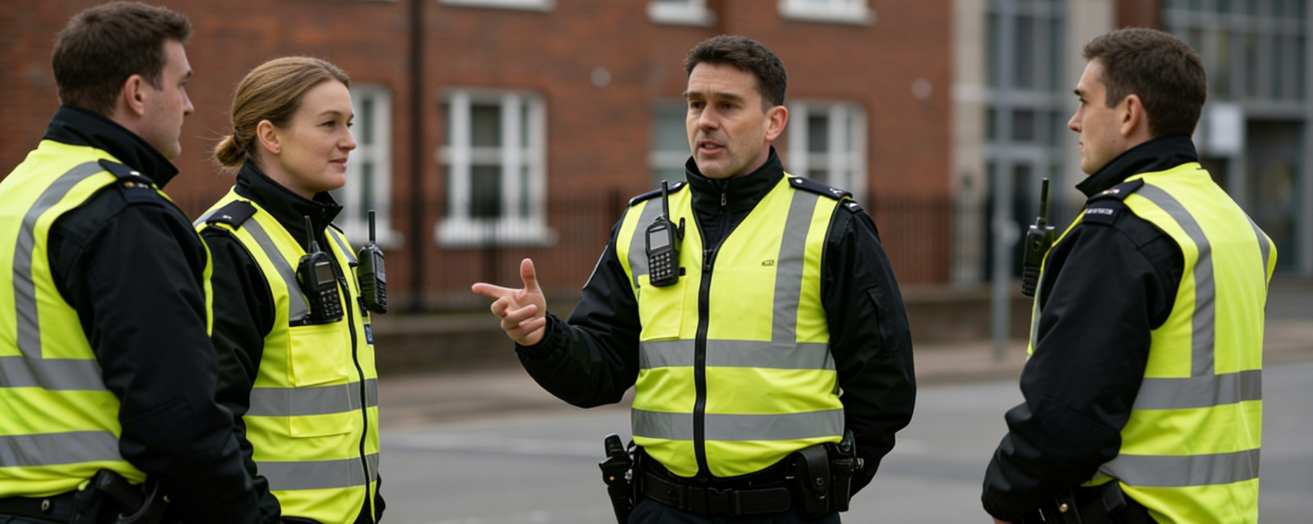
Your average terrorist does not want attention drawn to them and will want to take photos or make notes, uninterrupted. Knowing that security is highly active, vigilant and willing to engage with members of the public, is not an atmosphere conducive to the planning of a successful attack.
Terrorists need to plan, and fear detection, so if your security officers are proactive and highly visible, it is far easier for them to move on to plan B. If your security has suspicions regarding the behaviour of anyone, then a full description of the person/s concerned can be made, CCTV alerted, and a record of the suspicious behaviour can be documented, and this information can be shared with security colleagues within your company and across any relevant local business intelligence networks.
Your security team will also know what to do if a bomb threat is received, and will be key in emergency situations where site evacuation (or invacuation) is required. They will be able to pass information, clearly and concisely, to the emergency services and can liaise with them on arrival, as well as provide help and direction to your staff and visitors.
Loss Prevention
Another key role of security is the detection of crime and, where applicable, the detention and processing of suspects and recovery of property.
This goes far beyond the usual retail site security officers and store detectives, who work together to detect, disrupt, detain, and ban or prosecute thieves.
Hotels, factories, warehouses, bars/clubs, and numerous types of premises operate random staff bag or locker searches. This often identifies and helps eliminate insider theft problems.
Active CCTV monitoring is also highly effective at detecting suspicious behaviour that evolves into arrestable offences. Having the police arrive on site to catch a burglar breaking into a building, or a graffiti-spraying yob in the act, is highly satisfying and saves huge amounts of money for clients. Highly trained and observant security personnel prove massively successful at spotting company property “walking out the back door”, and have caught many workers loading stolen property into vehicles or removing items via fire exits and other covert routes.
Health & Safety
The responsibilities of all organisations, under Health & Safety legislation, are many and varied. Having security officers patrolling your buildings on a regular basis ensures that your company is fully compliant.
Checking that fire escape routes are clear of obstructions, fire doors operate correctly, trip hazards are removed, fire fighting equipment is present and serviceable, first aid kits are present and contents are sealed and in date, accident books are correctly filled out, any incidents are fully and accurately reported, fire alarms are tested regularly, and emergency training for day and night staff takes place at the required intervals is all well within the remit of your security team.
Your security team is also trained in first aid and can provide rapid assistance to any staff member or visitor to your site who requires pre-hospital care.
Some security officers have more specialised FREC 3 or D13, advanced trauma care training and will be competent to deal with more severe, life-threatening situations. This training comes into its own in the event of a nearby terrorist situation when police have activated “Operation Plato” and have locked down the area, allowing nobody in or out until a full assessment of the situation has been made.
Ambulances or medical staff will not be able to enter the area, and anyone who has been injured will only be able to receive treatment from those already within the sealed-off zone. This may well be these trained security officers.
Business Continuity & Disaster Management
When things go wrong, people turn to security officers for help and guidance. There will also be procedures in place to ensure that a variety of emergency situations are dealt with effectively, with the best possible outcomes for the client.
Security management/officers will also work with a client’s leadership team to formulate procedures to ensure that disruption to normal business operations is kept to a minimum in a variety of disaster or emergency situations. This continuity of business may involve regular data backup, remote off-site operational facilities, or home working systems. In any disaster situation, security will be at the forefront of information management, maintaining effective communications, and assisting in any transition procedures.
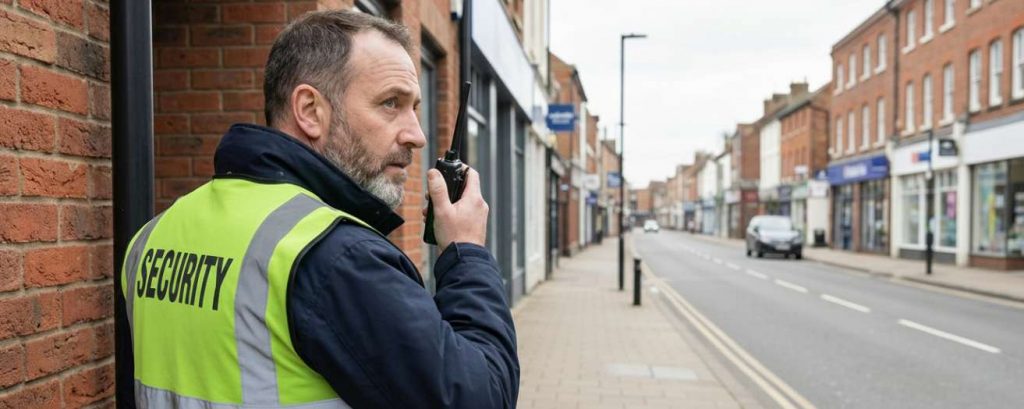
So, Who Needs Security Staff?
Thinking that security is just the uniformed men and women who stand in your lobby and say hello to visitors is horrendously naive. Yet many still do.
You don’t need security if:
- Your corporate reputation is unimportant.
- You don’t need to comply with Health & Safety, Terrorism, or Fire Precautions laws.
- Nobody steals your company property.
- Nobody damages your company’s property or premises.
- No unauthorised person/s can enter your sites.
- Guests and visitors can be dealt with remotely.
- Unexpected emergencies or disasters can’t happen to your company.
- Nobody has an accident on or near your premises.
- The safety of staff and visitors is not important.
Spoiler alert. You DO need security.
In almost all cases, the absence of professional security staff would make company operations unsafe, illegal, destructive and very, very unwise. Security simply enables you to safely and legally do what you do.
Instead of looking at the money that they do not bring in to your company, look long and hard at the financial loss and damage that would occur without them.
Security Enables Everything Else
The businesses that understand security’s true value don’t view it as a cost centre – they see it for what it is: the foundation that allows everything else to happen safely, legally and professionally. Whether you’re building an in-house team or scaling a guarding operation, the difference starts with the people you hire and how you prepare them.
GuardPass helps security companies and end users find, vet and develop the professional officers described throughout this article. From access to the UK’s largest pool of SIA-licensed candidates through GuardHire, to BS7858 vetting through GuardCheck and CPD training via GuardSkills, we support every stage of the officer lifecycle.
Book a demo to see how GuardPass can help you build the professional security team your business depends on.