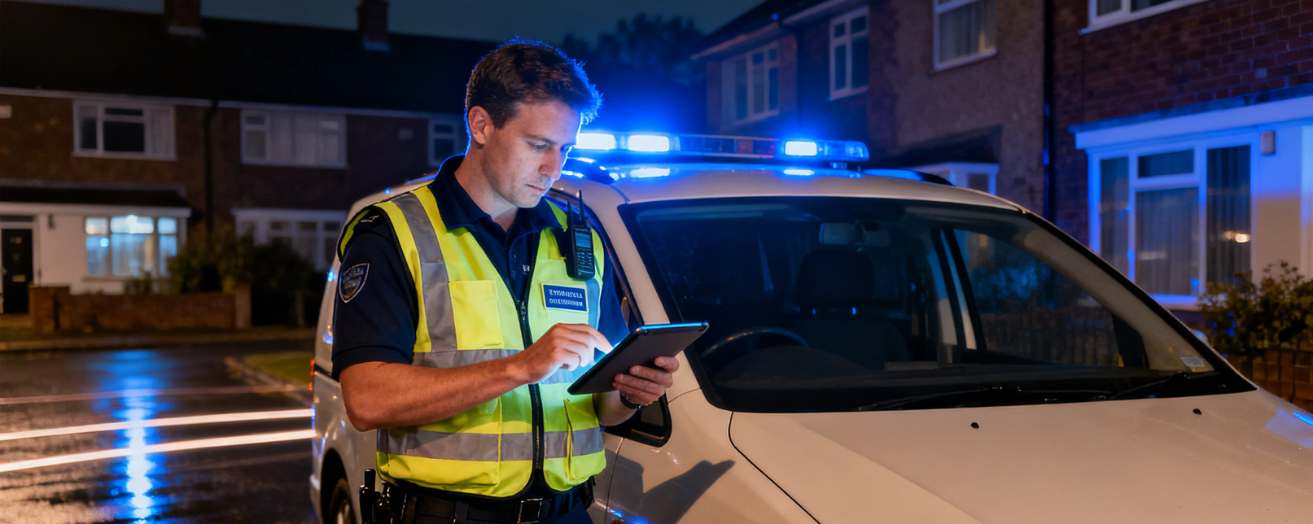
The UK security industry is in a state of flux. Many factors are driving this change. New technologies, regulatory changes, increased crime, lack of visible police presence and the perceived poor calibre of many security officers that still seem to obtain Security Industry Authority licences, all play a part in this evolution, for good or bad.
One key sector that seems to be on an upward trajectory is the alarm response and mobile security industry. The reason for this is manyfold, and involves several of the factors mentioned above, but one thing is for certain: there are some clever people leveraging groundbreaking technological advancements to provide a greatly enhanced and increasingly important physical security service. A service that was traditionally utilised by larger organisations, and a few enlightened, high cash flow private companies.
These days, however, alarm response services have become financially viable and widely available to small businesses, and even residential clients.
Let’s have a more detailed look at what has gone wrong in society and how the private security industry has conquered a range of challenges.
What Is Driving The Demand?
Crime Going Up, Consequences Going Down
As a Metropolitan Police Constable in London during the 1990’s, I remember when a uniformed officer was sent out to every call received from the public. Hard to imagine, I know. Almost every police station had a front desk open to the public 24/7, and if someone called the 999 emergency number, they would get through to a human immediately.
There would be well-trained, professional police officers, actually walking around engaging with the public, confident and physically robust enough to deal effectively with violence, aggression, and anti-social behaviour.
If a suspect was arrested for burglary, they would be in front of a Magistrate within a couple of weeks, or the next working day if bail was not appropriate. Prisons still had room to accommodate criminals, and when the punishment fitted the crime, offenders were far more likely to end up there. It wasn’t perfect, and there were still frustrations regarding sentencing, but things got done. Offenders got caught as local coppers knew the ‘scrotes’ most likely to have been responsible, and if they didn’t commit the crime, they knew who did.
So Why the Trip Down Memory Lane?
Society has changed dramatically over the last 30 years, leading to a substantial increase in crime and the perception of it. Please don’t believe politicians who quote crime figures that are based on ‘reported crime’. Who reports crime these days? Why bother when it is almost certain that the offence will not be investigated, your property will never be recovered, or the person who assaulted you will not be found.
Policing across the country is in crisis. Funding is woefully inadequate. Pay and conditions for officers are increasingly intolerable. Entry standards have plummeted, and training is simply not fit for purpose. Add to this the horrific failure of leadership to support their officers, and a constant bombardment of hate and criticism from the ‘trial by YouTube generation’, and what was a well-respected, professional vocation is a shadow of its former self, and frankly, no longer fit for purpose in any 1st world country.
So, Chummy, who has broken into your house and taken thousands of pounds of your hard-earned personal possessions away, knows that the chances that his collar is going to be felt are negligible. His chosen profession is a far less risky endeavour these days, and he or she (being a villain is an equal opportunity affliction) rapidly discovers that crime does indeed pay.
But, criminals do get caught. They make mistakes. Become blasé. Get grassed up by someone with a grievance against them, or in some cases, still get found out by the cops! Alas, in the UK, for a host of depressing reasons, punishments rarely fit the crime and Judges are under pressure, due to overcrowding in the prison population (build more prisons I hear you say) to impose non custodial sanctions on all but the most heinous offences: murder, serious sexual assault, saying nasty things on social media (I wish I was joking there). This means that even the most hardcore repeat offenders have great difficulty getting themselves banged up these days.
In a nutshell, with a far larger population and shifting demographics, policed by underfunded and collapsing law enforcement, the chances of a satisfactory outcome after reporting a crime is negligible, with many recorded positive results in fact being down to statistical reporting manipulation, rather than anyone actually being brought to justice.
If an offender does manage to get caught and arrested by the police, with the likelihood that they’ll receive any meaningful punishment being highly unlikely, there is little incentive for them to change their criminal ways. Indeed, these two factors are encouraging the lazy and feckless in society to embark on a life of crime and even encouraging foreign miscreants to come to these shores for an easier time.
Filling The Vacuum
This is all quite depressing, but what can you practically do as a homeowner or proprietor of a small business to help protect your property or ensure business continuity?
I’ve written articles on physical security measures for property protection in the past, so I won’t go over old ground here, but intruder alarm systems were always a good idea. They make a burglar nervous at the very least, and hopefully, they will leave in a hurry and without too large a haul of your property.
The big problem is that alarms go off all the time, all over the place, and normally for completely innocent reasons. We have all had that neighbour whose car alarm went off every time a lorry drove past, or the wind picked up a bit. I had a neighbour with a house alarm that went off pretty much every night when they were on holiday. They made the mistake of believing the sales chap who said the motion detectors wouldn’t be activated by household pets. That sales chap hadn’t seen their dog, clearly.
We live in a time when an audible alarm barely raises an eyebrow, and almost nobody is going to bother to call the police to report the house across the road’s intruder alarm going off. If they did, it is pretty unlikely that a police unit would ever be dispatched to investigate.
Moving Away From 24 Hour Guarding Services
Larger companies also have to deal with growing financial challenges.
In today’s economic climate, there are very few businesses that are not seeing a detrimental impact on the bottom line. Throw in some debatable calls by a Government that appears to have a dubious grasp of operational business challenges, and you have a situation where employers are looking to drastically cut costs. With increases in employers’ N.I. contributions, and additional operational expenses, guarding companies also have no choice but to quote minimum charge rates that are no longer financially viable for potential clients.
If you can’t afford continued 24/7 guarding cover at your sites, then using a combination of 3rd party security options like remote CCTV monitoring, intruder and fire alarm response services, and random mobile patrols would seem to be a reasonable cash-saving alternative.
I’ve probably taken the most convoluted route possible to get around to discussing alarm response services, but context is crucial to understanding how we got here and where we are headed.
Why Doesn’t Every House And Business Have A Monitored Alarm System?
Cost and Complexity
Traditionally, you would fit an intruder alarm system because it sounds like a good idea, but after some investigation, you decide not to pay a subscription to an alarm monitoring company. Here’s why. Upon activation, the alarm monitoring company would contact a nominated person to inform them.
Unfortunately, the alarm only goes off when you’re at your timeshare in Tenerife and your closest trusted relative lives 250 miles away in Abergavenny. Your next-door neighbours are a nice couple, but he works nights, and his good lady Wife is already of a somewhat nervous disposition.
Anyway, would you want a loved one to be first on the scene when potentially violent criminals are climbing out of your bedroom window with armloads of loot?
Perhaps not.
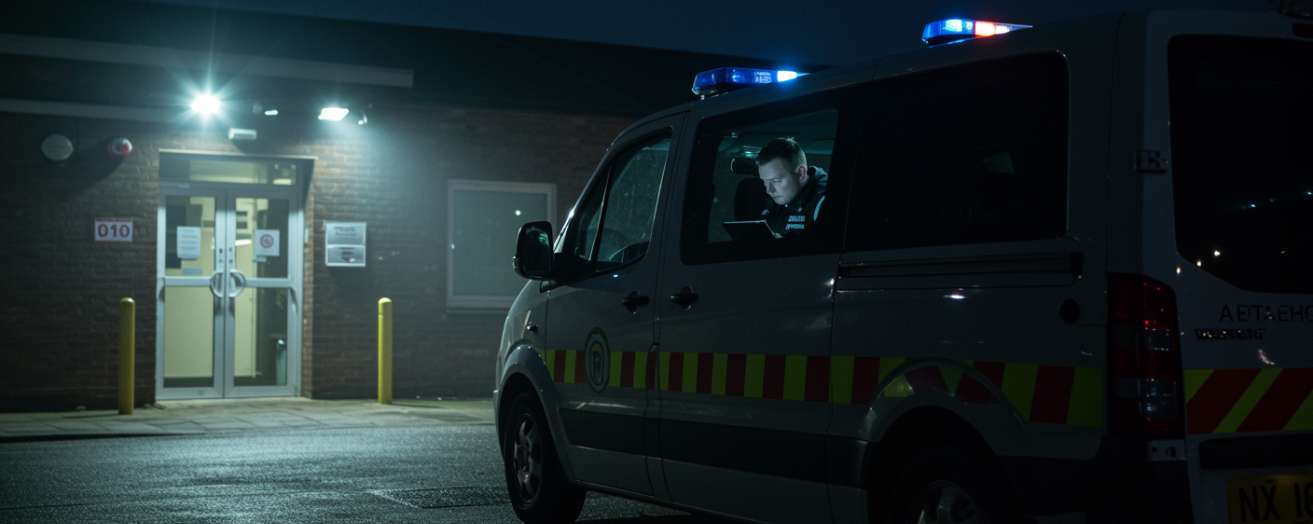
So you are also able to nominate a security company that has alarm response services in your area. They will charge a call-out fee every time they attend, but more awkwardly, they will need keys, alarm codes, and access instructions for your premises, which they will store securely for you, of course, for a monthly keyholding fee.
This is all starting to get expensive and a bit of a faff, so you’ll just make do with the standalone alarm system and hope that someone in earshot will assist in an activation. Or not, as we know.
Traditional Alarm Response Problems
What most companies that provide keyholding and response services don’t tell you is that a good 90% of intruder alarm activations (It’s more, but I’m going on 20 years of experience in the sector, rather than any published ‘statistics’, so I’m playing it safe) are false alarms.
There may be an innocent environmental cause like window blinds swinging in the breeze, or a poster falling off the wall in your teenager’s room, and do not get me started on Christmas decorations! Rarely will an activation be caused by criminal activity. Things can get expensive if the security company has to attend your property 12 times in a month because a motion detector is activated every time your cat has a zoomie session, or your curtain moves because a window was not closed fully.
But it is worse than that. A security company may boast of an “average response time” of 30* minutes (*amend as applicable) to an intruder alarm activation, and that is great if the officer with the keys to your property, locked safely in the back of their van, is close by when the alarm goes off. Unfortunately, sods law dictates that on the one occasion that your alarm has been triggered by a break-in, the security officer with the keys to your home or business is stuck waiting for a boarding up company to secure a site that has been broken into, 20 miles away from your property and will take 2 hours to get there.
Still, more useful than calling the police, but certainly not as you’d hope. Look for terms in the service agreement like “this is a shared service”, which will excuse big delays when you need them least. Nobody is to blame. It is frustrating for the security officer as well, and anyway, you may be lucky enough to have your keyholding officer nearby when required. Fingers crossed.
It seems like a valuable service is hampered by both cost and unreliability.
Why Does Alarm Response Work Now?
Reduced Costs
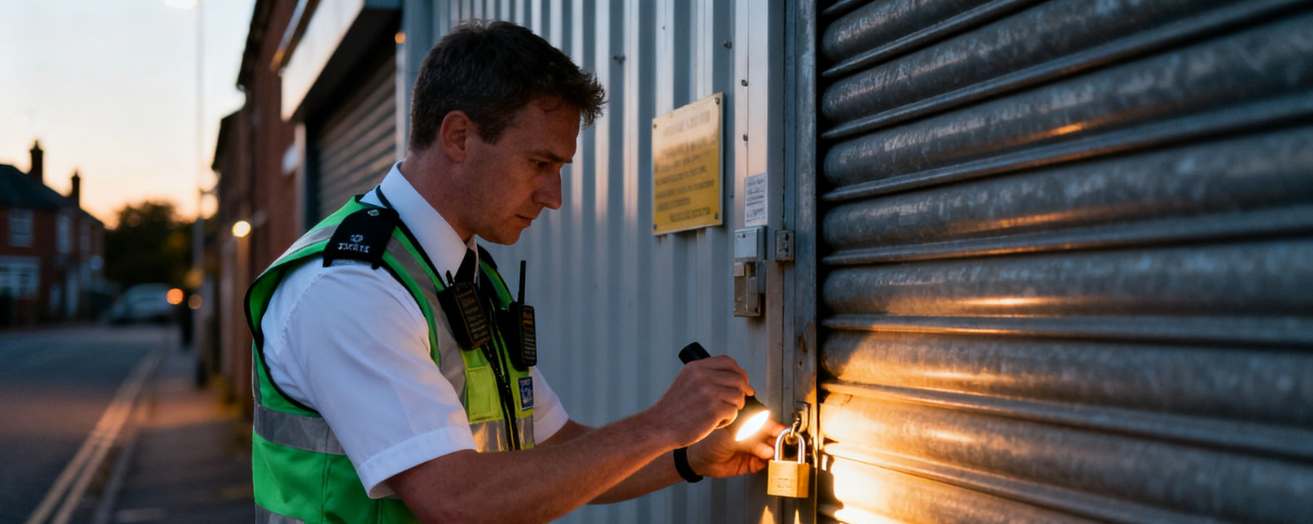
Wouldn’t it be great if the keyholding fees were removed from the cost equation? Remember when I said that over 90% of intruder alarm activations. Add to this the fact that the vast majority of intruder alarm systems auto-reset after a certain time (without needing to enter a property to reset a panel), and it would seem that, in most cases, a detailed internal patrol of the site is a waste of time.
If an external visual check of your premises can effectively detect any unlawful entry or crime, paying a company to hold a set of keys for you would seem like an unnecessary expense.
Massively Improved Response Times
If you are no longer having to rely on the one individual security officer who has your keys locked away in a safe in the back of their van to attend your alarm activations, then response times can improve exponentially.
I have seen several security companies that do not even have a dedicated security officer for your area, and rely on an officer having to return to their company HQ to sign out clients’ keys before returning to investigate an alarm. Your keys may be very safe, but your alarm response time is horrendous every time.
Times Are Changing at Last!
Here comes the technology. If your alarm monitoring service uses an advanced system to deploy the closest available security officer to your premises, then you’ll have someone investigating the activation fast. No need to wait for a particular keyholder that may be miles and miles away, or stuck dealing with another emergency. There’s also no delay while someone goes to an office to get your keys first.
At the end of the day, most end clients will prioritise speed of security’s arrival and cost of service over everything else.
Security On Demand
These new ‘security on demand’ services are made possible by clever new technologies. Using cutting-edge AI, systems can be integrated with alarm monitoring centres’ existing software, so that the moment an alarm is received, tech wizardry locates the nearest available security officer and instantly sends them all the information they require to investigate.
If there is any problem with the first choice response unit, the next nearest will be automatically deployed. Speed is greatly increased by removing the human element from the dispatch process, as control rooms can be very busy places, and the time between an alarm arriving at the monitoring centre and a phone call to a response officer, or a security response company’s control room, can vary significantly.
As with so many things these days, the security officer has a smartphone app that uses the technology of the phone to provide real-time GPS location data and provides a clear and simple form for completion when the activation is investigated. This allows the attachment of photos and provides all the site and contact information required to effectively deal with the alarm.
If a breach or criminality has been found, the officer will have clear instructions on escalation procedures and how to proceed. This may involve contacting pre-selected individuals and following their guidance, or even calling a nominated boarding up company to secure the site.
In some unavoidable instances, the site will still need to be entered, or access to certain high-risk areas may be required. In these cases, when more than a simple external check is needed, improvements in external secure safe technologies mean that keys, access cards and any alarm fobs can be accessed and resecured after use.
In such cases, there will be full and clear instructions on the alarm activation alert, sent to the security officer.
Recommended Reading: Top 10 Characteristics of a Good Security Officer
Don’t Just Take My Word For It!
I placed a post on business network LinkedIn, about this subject, and had this response from Ant Hebblethwaite, Sales Director at the Doncaster Security Operations Centre (DSOC):
“We have seen firsthand how pressures are reshaping the demand for private alarm response and remote monitoring services. Rising insurance requirements, organised criminality, and tighter operational budgets are pushing businesses to look for smarter, more cost-effective protection models rather than traditional static guarding.
Technology is playing a significant role in widening access. The evolution of AI video analytics, verified alarm response, and standards such as BS EN 50518 has allowed high-level remote monitoring to become both more reliable and more commercially viable for a broader range of sectors.
When deployed correctly, these technologies don’t just reduce cost, they improve outcomes, speed of intervention, and evidential quality.”
What Does This Mean For Alarm Response?
The desire for rapid, efficient, low-cost intruder response services has never been greater.
A perfect storm of increased crime, more brazen criminals, and a lack of risk or repercussions for their actions mean that burglary, sometimes by violent career criminals or organised criminal gangs, is reaching epidemic levels. All conspiring to make alarm response services more important than ever.
Now, at last, technology is driving costs down, speeding up response times, and making alarm response services a viable financial and operational proposition for a broad range of new potential customers.
I will leave the final word with the UK’s leading experts in the field of high-tech alarm response solutions, AURA:
“…We’re seeing a significant “response gap” as police resources are redirected toward high-harm crimes, leaving property and low-level incidents with longer wait times.
The value here isn’t just in ‘private police,’ but in guaranteed outcomes. By using technology to connect ARCs (alarm receiving centres) directly to a distributed network of vetted SIA responders, we’re ensuring that ‘out of reach’ shouldn’t mean ‘out of luck’ for smaller businesses and Residents’ Associations. It’s about professionalising the response when the public sector simply can’t be everywhere at once.”
Very well said
Build Your Response Team With The UK’s #1 Security Platform
Whether you’re scaling alarm response operations or building a mobile patrol division, the right officers make all the difference. GuardPass connects you with the UK’s largest pool of SIA-licensed professionals, all pre-verified and ready to deploy. Combine that with BS7858-compliant vetting through GuardCheck, and you’ve got a recruitment process as fast as the response times your clients expect.