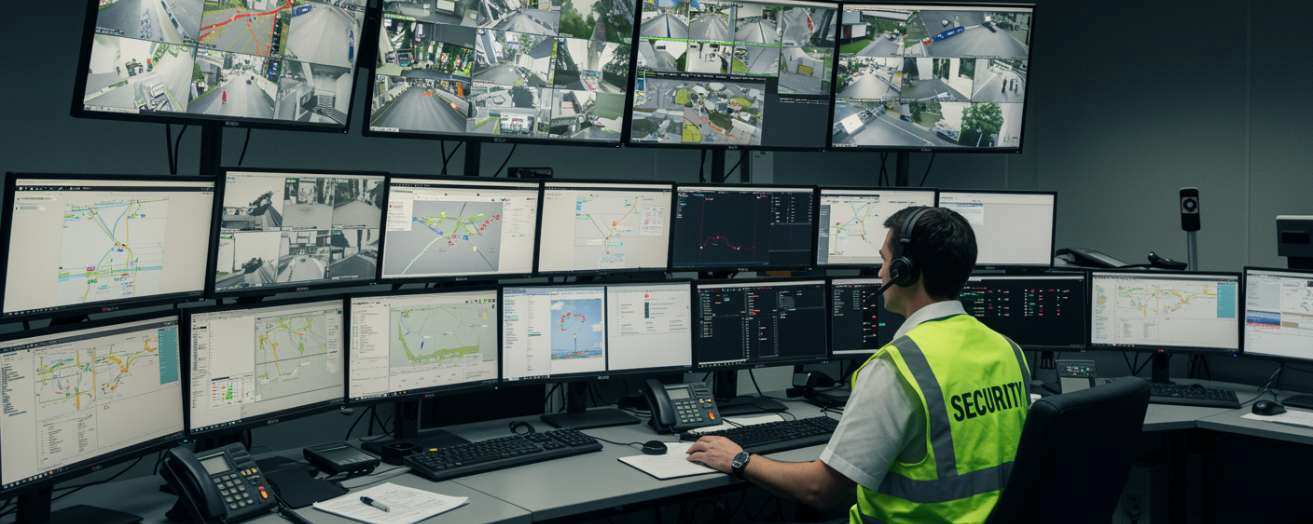
It’s a funny old time in the security industry. The arrival of AI and some new technologies has raised questions about the future of the sector and who and what will be most affected.
Where Tech Is Providing New Solutions
The physical security industry is certainly not going to do away with human officers anytime soon. The technologies we are seeing implemented now are, in general, complementary to, or assisting the performance of, traditional security applications. Some of the key sectors seeing changes are:
Access Control
Biometric systems are making an impact at the moment and will certainly become more common as technology becomes more widely adopted. Fingerprint reading or even facial recognition are starting to make the usual access cards redundant.
Things like iris scanning or voice pattern recognition, while still viewed as a tad “Mission Impossible”, are also effective in high security specialist scenarios. These systems have the benefit of not expiring and are hard to defeat. People also tend not to leave their finger or face at home when they’re in a hurry, reducing the need for a security officer to verify identity.
Security Patrols
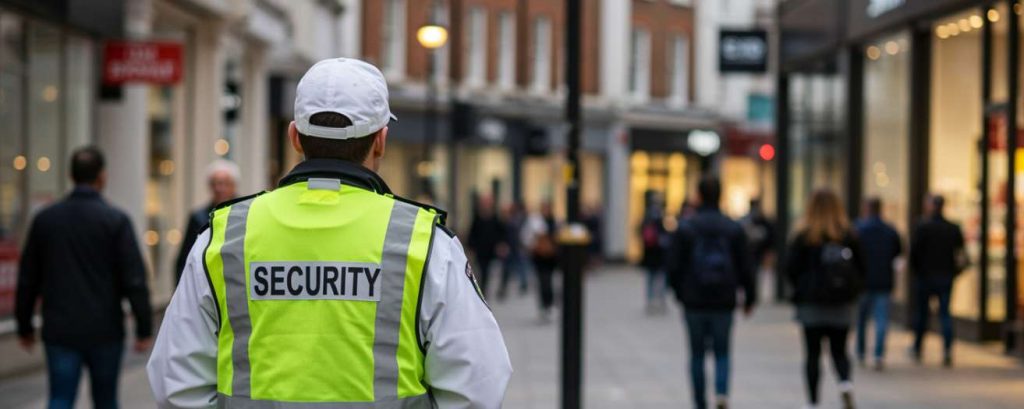
We have all seen the pictures of “security robots” ending up in shopping centre water features. With the UK’s level of anti-social behaviour, the financial viability of using robotic automated patrol systems in publicly accessible areas is minimal. There are, however, applications where robotic devices are excelling.
The US military is already using robotic dogs to patrol the huge perimeters of airfields and bases. Armed with cameras and public address systems, they can be dispatched to investigate CCTV or perimeter alarm activations, and record and report findings wirelessly, with minimal human intervention. They are also able to walk for miles before needing to return to their base to recharge. They don’t get bored, complacent, or need to stop for a coffee.
There has also been a huge increase over recent years in static intruder detection and alarm systems. Deployed primarily in vacant properties, farm land, building sites or any large open areas, these battery-powered, CCTV and motion detection systems provide an audio and visual warning and deterrent, normally using GSM or mobile data systems to report issues to a control centre. Many of these units are recognisable by being tall, painted with hi-vis stripes, metal (armour) plated, and with a strobe light on top.
Sadly, these do sometimes get stolen and/or destroyed, despite their immense weight and the fact that they are sometimes bolted to the floor. Whether these static remote systems are a better value than a human security officer depends on the likelihood of loss or damage to the unit.
Recommended Reading: Will Robots Replace Security Officers?
Task Management Systems
Pen and paper have largely now been replaced by smartphone apps that can be used for a variety of purposes, including patrol recording, incident reporting, welfare monitoring, and communications. These apps can utilise a variety of mobile technologies, including GPS location recording, 4G/5G wireless data, and photo and video recording. They can also replace a range of forms to securely record statements, key control, vehicle and equipment checks and fault reporting, even booking leave or HR information updates.
While these systems make admin easier, faster, and more efficient, they do not replace humans. Just save trees.
Where Tech Is Not The Solution
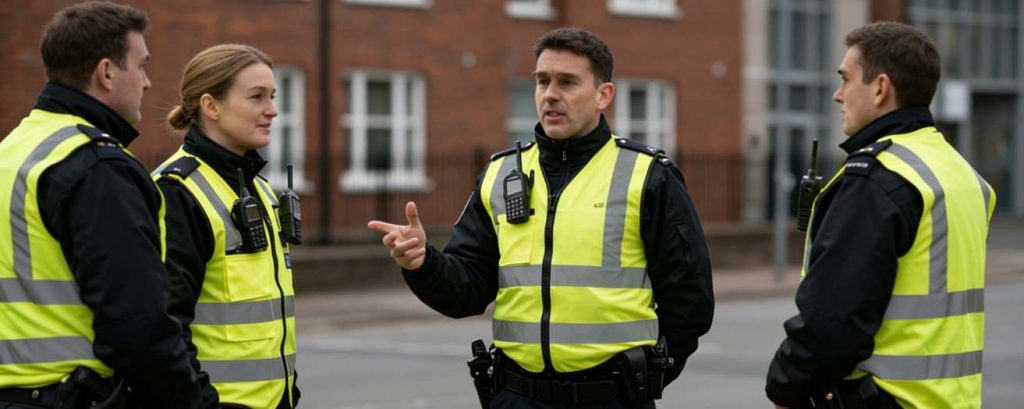
The “human touch” is still a vitally important aspect of most security operations. When someone needs advice or guidance, a plaster on a cut finger, or physical intervention is required to prevent violence or offences, a robot just won’t do.
It is also a universal truth that robots, CCTV cameras, alarm systems, etc., etc., are far more likely to be attacked and damaged than a human security officer is to be assaulted. Sadly, with violence against security officers increasing, this is a gap that is closing.
Security officers are, however, still vital, and in some cases, needed more than ever. A couple of examples are:
Street Wardens
Across the country, with the sad disappearance of Police from our streets, more and more businesses are getting together to provide private security officers to specific areas. Business Improvement Districts (BIDs) are being formed, and Street Wardens are being deployed to deter crime, prevent anti-social behaviour, and assist the public. Some of these security officers are receiving additional training and are CSAS licenced, allowing them to deal with low-level street crime, providing them with limited Police powers.
Recommended Reading: Security Industry Predictions for 2026
Alarm Response Services
Technology is making some procedures far more efficient, and this is driving down costs. One area where this cost saving can be passed on to the end customer directly is alarm response services. With the reduction in costs and response times this technology creates, inevitably comes an increase in the demand for these services.
These days, response services can be provided economically to small businesses and even private residential properties that would never have previously considered it. This increase in demand, also partly fuelled by a lack of effective Policing, has created an expansion of the human response officer network, making it a growing employment sector.
Parting Thought
There is no doubt that as technology evolves, becomes more robust, more versatile and more affordable, there will be an impact on traditional human security personnel. As with all technology, however, there will be new opportunities in the operation, maintenance, deployment, and even manufacturing of equipment.
Currently, technology is assisting human assets more than replacing them, and long may that remain the case.
Technology Enhances—But Doesn’t Replace—Your Workforce
AI and new technology are changing how security operations run, but they haven’t changed what matters most: well-trained, properly vetted officers who can respond when it counts. The companies gaining a competitive advantage aren’t choosing between humans and tech—they’re using technology to make their people more effective.
GuardPass helps you build a workforce ready for this hybrid future. Find SIA-licensed officers who understand modern task management systems, upskill your team with CPD training through GuardSkills, and ensure every hire meets compliance standards with BS7858 vetting through GuardCheck.
The technology is evolving. Your team should be too.